Water Guide
Foundation drainage and grading in the Grand Valley
The cheapest foundation work available, the one with the best return, and the one most often left out of a structural quote. Everything here can be audited by a homeowner in under an hour.
Why this matters more here than in a wetter state
Expansive clay is damaged by change in moisture rather than by moisture itself. In a rainy climate the soil around a house stays broadly wet and the swing is small. In the Grand Valley the background is arid, about nine inches of precipitation a year, so every artificial water source is a large local deviation from the background. A sprinkler zone running against a stem wall three times a week all summer delivers more water into that soil than the sky delivers in a year.
The result is that a Grand Junction house can have one wall on soil at high moisture content and the opposite wall on soil that is desiccated, which is precisely the differential condition that racks a frame.
The six sources, in order of volume
- Roof water. The single largest concentrated volume. Every square foot of roof sheds water to a handful of discharge points.
- Landscape irrigation. Smaller per event, but relentless and precisely targeted at the wrong place.
- Surface runoff and grade. Whatever the ground does with water that lands on it.
- Canal and lateral seepage. Unlined ditches leak, and a lateral within fifty feet of a house is a persistent seasonal moisture source.
- Window wells. Small volume, delivered directly against a below-grade wall.
- Plumbing leaks. Supply lines, drains and irrigation valves. Small, constant, and invisible until something moves.
Grade: how much fall, and over what distance
The common residential rule of thumb is roughly six inches of fall in the first ten feet away from the foundation, with hard surfaces able to get away with a little less because they shed water rather than absorbing it. What matters more than hitting an exact figure is the outcome: if there is standing water against the stem wall the morning after a storm, the grade is wrong regardless of what a tape measure says.
Common causes of negative grade on Grand Valley properties:
- Settlement of backfill around the foundation over the first decade of the house's life, which is normal and expected.
- Landscape beds built up against the wall with edging that traps water.
- Mulch and soil added year after year until the grade has crept above the stem wall.
- Patios and walks poured level or pitched back toward the house.
- Lawn levelling that filled a low spot by raising ground near the foundation.
Downspouts: where to release
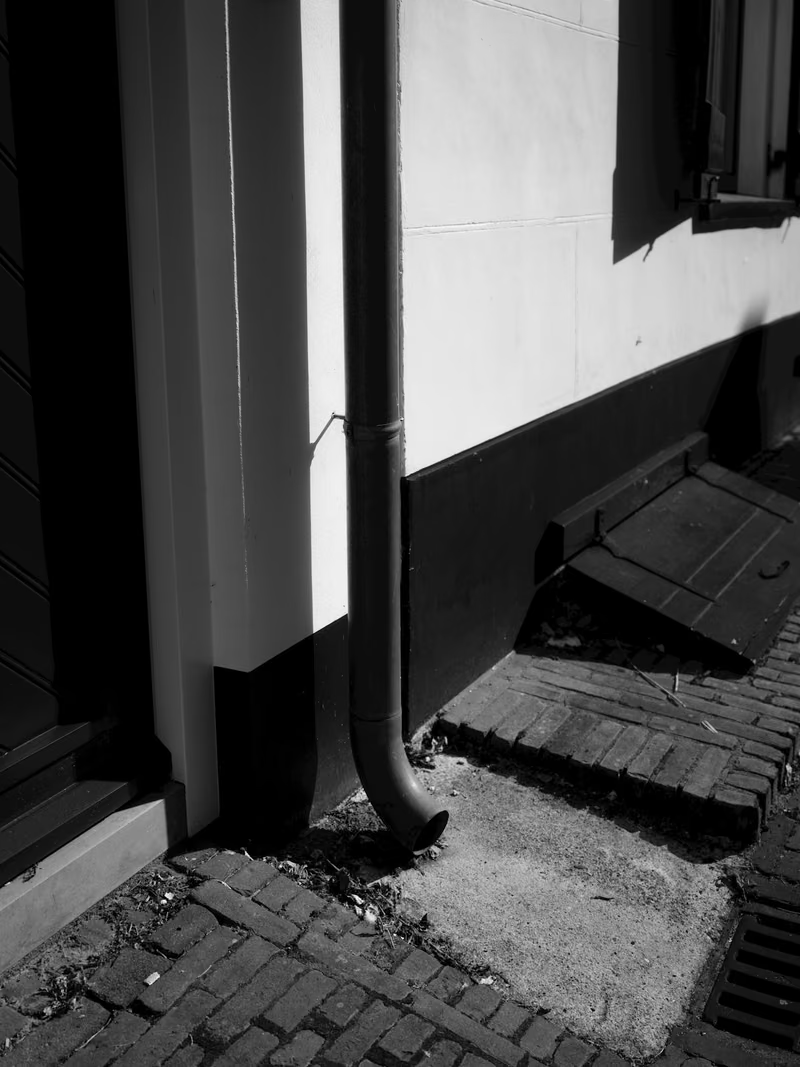
Six to ten feet clear of the foundation is the usual target for a surface extension, further where the ground is flat or where the soil is known to be highly expansive. Where an extension is impractical because of a walkway or a driveway, a buried solid discharge line taken to a pop-up emitter or a swale is the alternative. Perforated pipe is not the right product for this job; it releases the water along its length, which is the opposite of what is wanted.
Two details people get wrong: extensions that get lifted for mowing and never put back, and buried lines with no fall that silt up and back water toward the house.
Irrigation at the foundation line
The audit here is straightforward. Run each zone and watch. Look for spray heads throwing directly onto the stem wall, drip lines run inside the first few feet, planting beds against the house on a heavy watering schedule, and wet ground that stays wet between cycles, which suggests a leaking lateral or valve.
The remedies are cheap: reposition or change heads, pull drip out to a wider offset, and separate any foundation-adjacent planting onto its own zone so it can be watered lightly and evenly rather than on the lawn schedule.
One caution specific to expansive soil. Do not respond to a foundation concern by shutting off all water near the house. Abrupt desiccation moves a foundation as effectively as soaking does. The objective is steadiness.
French drains, drain tile and sumps
Where surface correction cannot move enough water, subsurface drainage is the next step.
- Exterior french drain. A perforated pipe in gravel and filter fabric, set to intercept water before it reaches the foundation. Effective, and the most disruptive to install on an established property. Roughly $40 to $110 per linear foot here.
- Interior drain tile with a sump. Perforated pipe set inside the footing line under the slab, feeding a sump pit and pump. The usual answer for a basement already taking water at the wall and floor joint. Roughly $70 to $160 per linear foot.
- Window well drains. A gravel column connected to the perimeter drain, plus a cover. One of the highest-value small items on this list.
An hour-long audit worth doing before spending anything
- Walk the perimeter during or right after heavy rain and watch where water goes.
- Trace every downspout to its discharge point and measure the distance from the wall.
- Run each irrigation zone and look for heads and lines wetting the foundation.
- Check the grade fall over the first ten feet with a long level or string line.
- Look into every window well for standing water, silt and debris.
- Find any ditch, lateral or canal within about fifty feet of the house.
On houses with early hairline cracking, this audit and the corrections that follow it are sometimes the entire repair. Where structural work is already warranted, the same corrections are what stop the problem coming back.
Scope and pricing on the drainage and grading page. Background on why the water matters so much here in the irrigation guide.